
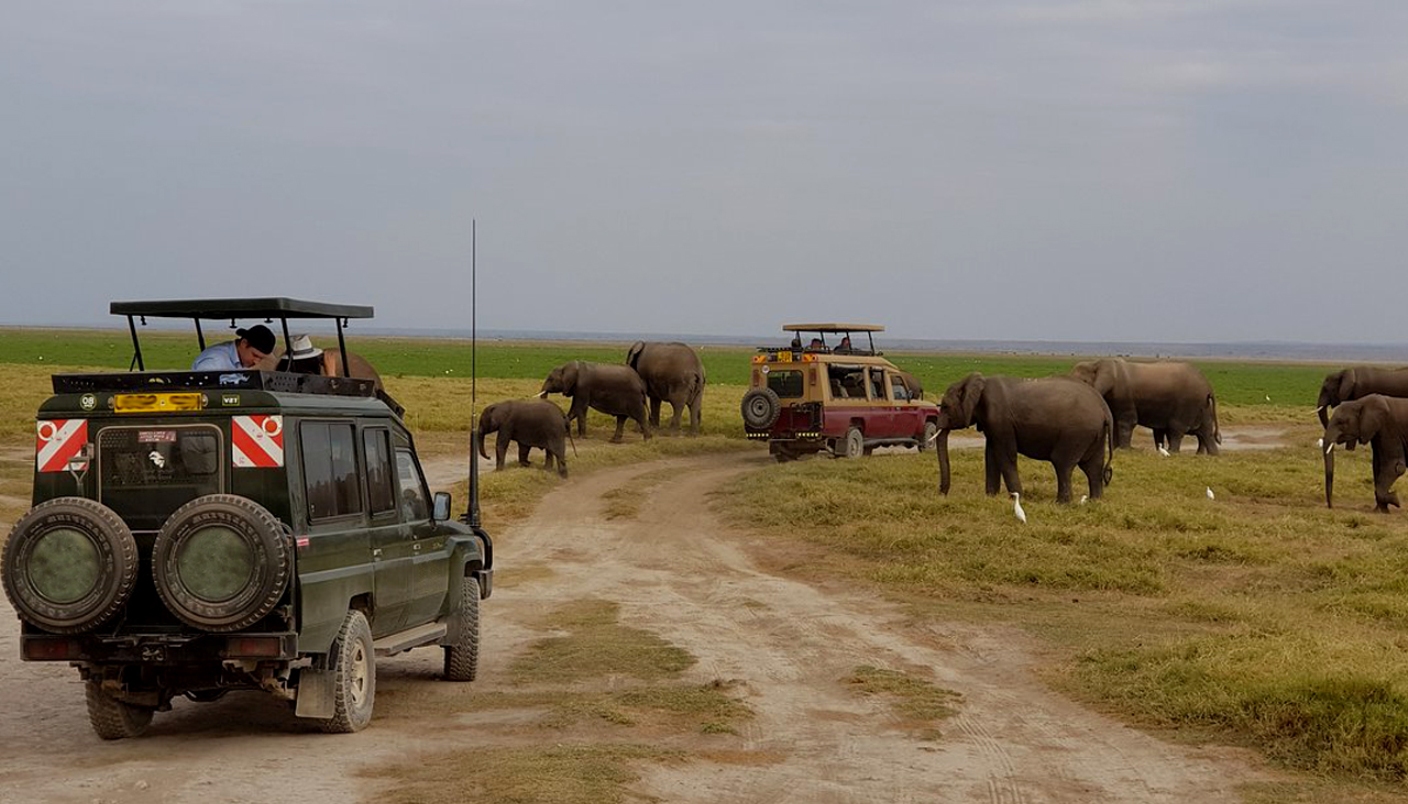
Amboseli National Park is one of Kenya’s best-known safari destinations, offering visitors an unforgettable experience with elephants, vast open spaces, wildlife viewing, and stunning Kilimanjaro scenery.
Located in southern Kenya along the Tanzanian border, Amboseli offers a unique safari experience that combines wildlife with stunning scenery. Few places offer elephants roaming freely in the grasslands with Africa’s biggest mountain behind them.
Amboseli should be on your travel list whether you’re on your first safari in Kenya, traveling as a family, want great photos, or are planning a safari with a beach holiday.
Amboseli National Park is in southern Kenya, in an area called Kajiado. This area sits on the border of Tanzania and Kenya. The park is about 240 kilometers from Nairobi.
This distance is short enough for a quick visit to the park as part of your safari. The park has a size of about 392 square kilometers, but the larger Amboseli ecosystem, which serves as an important wildlife movement corridor, is much larger than the park.
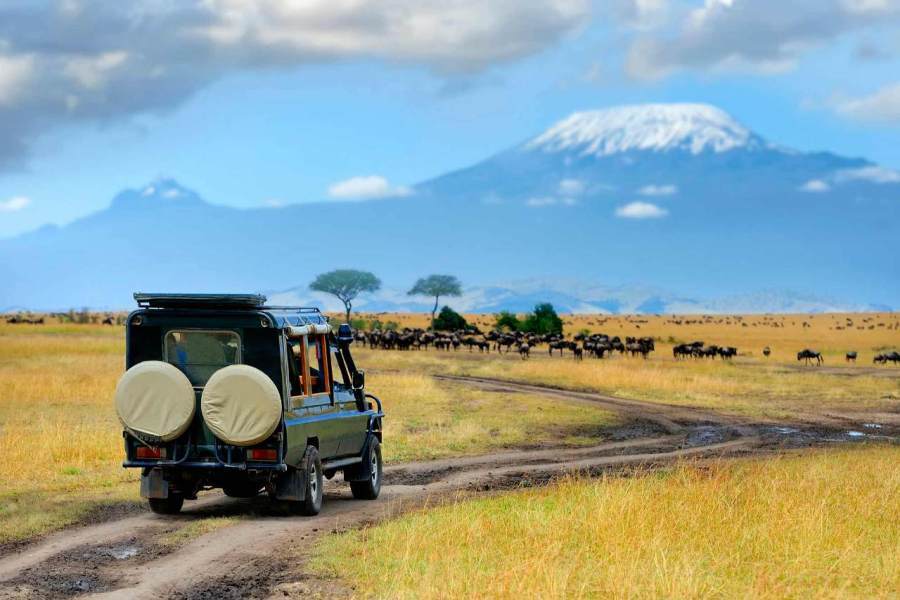
One of the highlights of visiting the Amboseli National Park is the presence of Mount Kilimanjaro. On a clear day, its snow-capped peak can be seen above the beautiful park.
Where Is Amboseli National Park?
The park is famous for its elephants and the views of Mount Kilimanjaro. The park has a big number of elephants, some of which have been studied for many years. Tourists will see elephants on the dry plains, eating near some swamps or at some water points.
Elephants plus Kilimanjaro is what a typical safari in Kenya is all about.
However, the park contains many more animals apart from elephants:
- Lions
- Cheetahs
- Leopards
- African buffalo
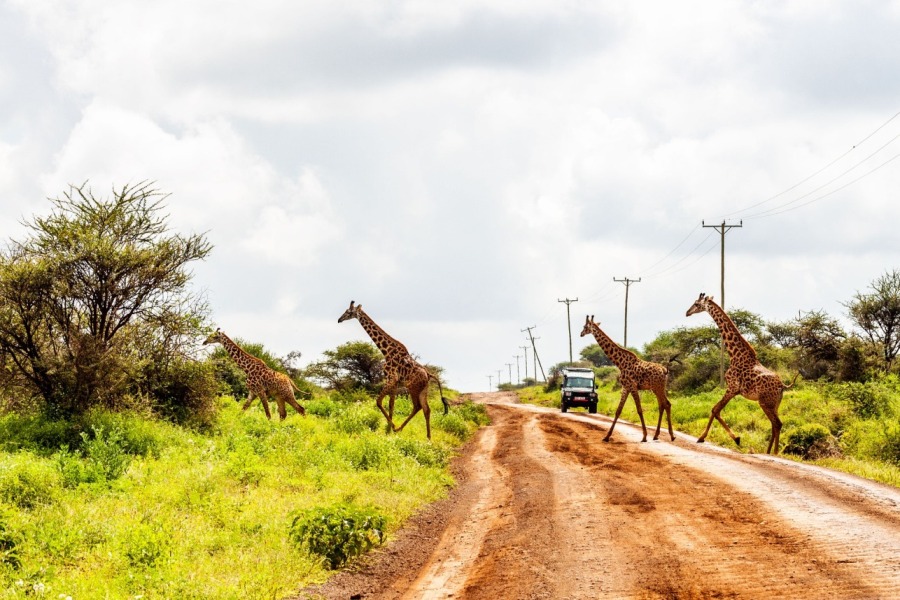
- Giraffes
- Zebras
- Wildebeest
- Hippos
- Hyenas
- Gazelles
- Antelopes
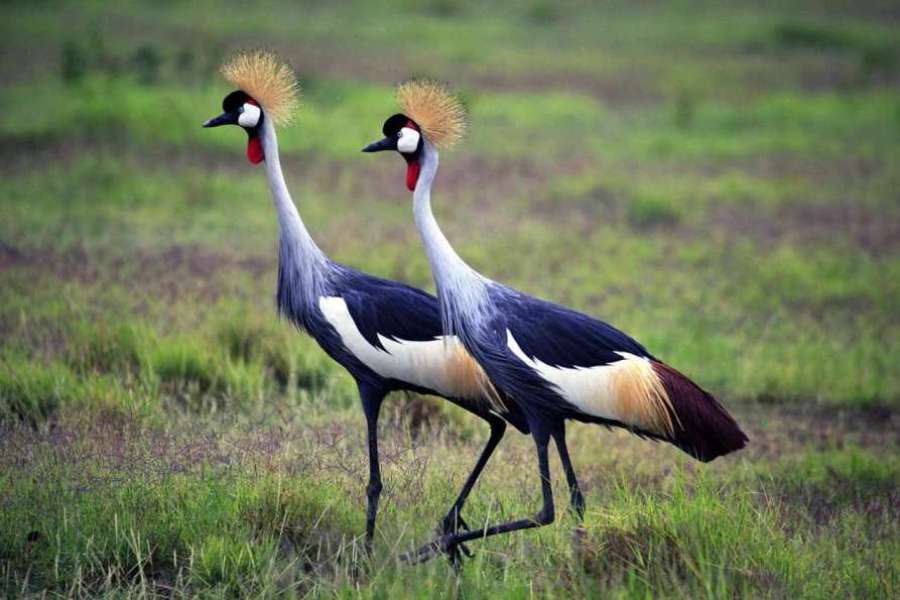
- Various bird species
Its wetlands, grasslands, woodlands, and other habitats host an impressive variety of wildlife.
Why Is Amboseli Famous?
Elephants play a significant role in making visitors want to visit Amboseli at any cost.
The park has earned a good reputation for being home to many elephants with huge tusks that represent the character of the area.
Seeing the elephants roaming around the plains is an experience that cannot be compared to anything else.
Elephants can be seen grazing and drinking water around the swamps of Amboseli.
Being social creatures, one can notice how elephants belong to their family groups, how the calf attaches to adults, and how elder elephants control the herd.
It is important to keep your distance while watching elephants, but always listen to the recommendations provided by the safari guide.
Mount Kilimanjaro Attractions
One of the biggest attractions in Amboseli is Mount Kilimanjaro.
Although Kilimanjaro is found in Tanzania, many of the popular photos of the mountain are taken in Amboseli.
The mountain has a height of about 5,895 meters above sea level.
The classic photo shows either one elephant or elephants in front and Mount Kilimanjaro in the back.
There is one important thing one should remember when travelling: travelling to Kilimanjaro does not mean that you will see the mountain.
The peak of the mountain is often a mountain covered with clouds, especially in the late afternoon.
It is better to visit the mountain in the early morning hours.
The Famous Amboseli Elephants and various wildlife
Although elephants are the main attraction of the park, Amboseli is home to various types of wildlife.
Lions
Among other wild animals, lions can be found during your safari.
During the hot part of the day, lions can usually be seen resting under trees, while they are more active in the early morning and in the evening.
Cheetahs
Amboseli’s vast plains offer good opportunities for cheetah sightings.
One of the reasons that make the park an interesting place worth visiting is the fact that cheetahs can hunt on open land.
Giraffes
Giraffes are usually seen browsing in the trees and bushes.
Their height makes it easy to find them in the open land.
Buffalos
African buffalos can be found in various areas of the park, but particularly near the water sources and vegetation.
These animals are very powerful, so it is advisable to keep a distance from them.
Zebras and wildebeest
Zebras and wildebeest are common herbivores in the park, and seeing them in the background of Kilimanjaro makes the experience even more interesting.
Mount Kilimanjaro Views and Amboseli’s Swamps and Wetlands
Amboseli National Park has many interesting features, one of which is its wetlands. Its name, derived from a Maasai word meaning “salty, dusty ground”, reflects certain elements of the dry environment. However, below the surface, there is plenty of water flowing in from the surrounding ecosystem of Mount Kilimanjaro.
The wetlands, which include places like Enkongo Narok and Longinye Swamp, serve as excellent water sources and feeding grounds for animals. The importance of wetlands becomes especially evident during dry periods. The swamps attract elephants, hippos, buffaloes, various birds, and other animals.
Another feature of Amboseli is the contrast between dry, dusty plains and wetland vegetation.
Birdwatching in Amboseli
Amboseli is also a great place for bird lovers.
The environment in the park, which comprises wetlands, grasslands, woodlands and plains, forms the ideal habitat for many bird species.
Birdwatching gives you the chance to see the following birds at certain times of the year:
- Flamingos
- Pelicans
- Egrets
- Herons
- Ostriches
- Eagles
- Secretary birds
- Kori bustards
- Kingfishers
- Weavers
- Hornbills
Bird-watching can easily be done alongside a regular game drive.
Amboseli for Wildlife Photography
Amboseli is considered one of the best wildlife photography places in Kenya.
This area has open terrain that is very favorable for taking pictures of wildlife, and Mount Kilimanjaro can provide wonderful images in the background.
Some of the best photography subjects here are:
- Elephants with Mount Kilimanjaro
- Giraffes with Kilimanjaro
- Zebras across the plains
- Lions at the break of dawn
- Birds in the wetlands
- Elephant silhouettes at dusk
- Herds walking through dusty areas
- Usually, dawn and dusk provide smooth light and pleasant temperatures.
- Using a telephoto lens is necessary for wildlife, while a wide-angle lens is needed for photos of the area.
Observation Hill.
The high location allows people to view the area from a broader angle and see exactly how the wetlands, plains, animal habitat, and faraway Mount Kilimanjaro link together.
Instead of looking at the landscape from inside a safari car, at Observation Hill one can see the area in a wider perspective.
It is also a great place to understand how large Amboseli is as an ecosystem.
Photographic conditions can be quite exciting around sunrise and sunset times.
Game Drives in Amboseli
The main method for exploring Amboseli National Park is through game drives. People enjoy morning drives because animals become more active due to the cooler weather. Moreover, early departure provides a good chance to see Mount Kilimanjaro sitting on the horizon before clouds start to cover its top.
Afternoon drives bring a different ambiance. At this time of the day, some wildlife are active as the temperature drops. A guide will assist in tracking animals, birds, and particular behaviors while exploring the many habitats in the park.
Cultural Experiences With the Maasai Community
Cultural Experiences With the Maasai Community: The Amboseli area is closely associated with the Maasai tribe. There are various tribes around the national park that follow pastoral traditions and have coexisted with wildlife for many years.
Responsible cultural tourism makes it possible for tourists to discover Maasai people’s traditions, habitats, dress code, music, handicrafts, cattle rearing, and relations between residents and wildlife. Visitors should always choose pre-organized cultural experiences so that communities can benefit from tourism.
Best Time to Visit Amboseli
Amboseli can be visited year-round.
Savanna/grassland regions are perfect for wildlife spotting at any time of the year because animals are likely to congregate around reliable water holes, and vegetation is quite thin, so animals can be easily seen.
Nevertheless, wet seasons have their own benefits.
The rain changes the environment completely by bringing new vegetation and adding stunning scenery.
Besides, bird-watching can be interesting during wet seasons.
However, if animals are not the main goal, the time of year should be taken into consideration carefully since cloudy weather can obscure Mount Kilimanjaro at any time during the year.
How Many Days Do You Need in Amboseli?
A stay of two nights could be a reasonable beginning for a first visit.
The trip could be arranged according to the following schedule:
- Day 1. Nairobi to Amboseli and afternoon game drive.
- Day 2. Morning game drive and then breakfast, leisure time or another activity followed by afternoon safari.
- Day 3. Morning safari which finishes with departure to Nairobi or your following destination.
Taking a trip lasting one night is a feasible possibility, especially for those who do not have much time on their hands; yet it limits the chances of experiencing what the park has to offer at different times of the day.
Staying for three nights or more enables one to enjoy a more gradual safari while also having more opportunities for wildlife viewing and taking pictures.
What to Pack for Amboseli
Packing right is critical for enjoying a safari.
Must-haves include:
- Light clothing
- Warm fleece jacket
- Comfortable shoes
- Hat with wide brim
- Sunglasses
- Sunscreen
- Insect repellent
- Binoculars
- Camera, additional batteries
- Chargers
- Water bottle
The dusty nature of the place makes it essential to be careful with electronic gadgets like cameras.
A light jacket can come in handy early morning when temperatures are usually cool.
Responsible Tourism in Amboseli
Tourism is a factor in the protection of wildlife and communities around Amboseli.
Travelers can help when it comes to responsible travel values by ensuring that they choose those safari operators that take into account socially responsible practices and are compliant with the laws of Africa when visiting game reserves, avoid littering, and keep away from animals while in safari vehicles.
It is important not to encourage wild animals to come closer to the vehicle nor to give them food.
Final Thoughts
Amboseli National Park promises the ultimate safari experience in Kenya.
The park is renowned for its extensive herds of elephants roaming across the savannah, plains, and wetlands, an endless variety of animals, opportunities to see the Maasai culture, and fantastic views of Kilimanjaro.
The most appealing aspect of Amboseli National Park is definitely the wonderful image of elephants traversing the plains with Kilimanjaro as the backdrop, although the park has much more to offer.
From early exploration through traditional Maasai villages to bird watching and breathtaking viewpoints, Amboseli offers all possible means to get to know the southern parts of Kenya.
Amboseli National Park is a place where wildlife comes together with landscapes and culture, as it provides an unforgettable safari experience for everyone wishing to go for a wild adventure in Kenya.